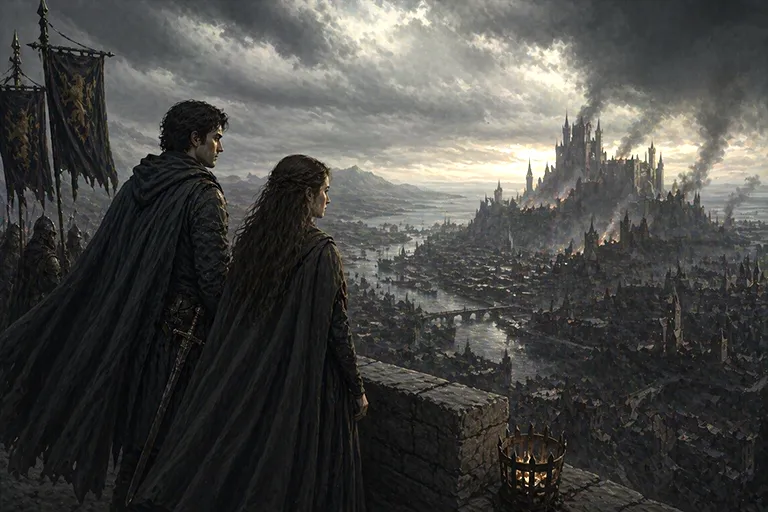
Kate Elliott published King's Dragon in 1997 and closed the seven-volume Crown of Stars with the title novel in 2006. Nine years. Seven volumes. A completed late-medieval-analogue epic that sits uneasily in the standard recitations of 1990s epic fantasy — Jordan, Martin, Williams, Feist — despite being built at comparable scope and delivered with comparable craft. Liath, a young woman with a dangerous heritage inherited from her astronomer father. Alain, a peasant boy drawn into the cathedral and then into the war. Sanglant, the half-Aoi prince whose blood makes him unclassifiable in his own father's court. Across seven volumes, their stories converge.
Elliott writes patient fantasy where elder races are political presences, not decorative elements. What follows is a curated comparison of six series in that tradition. My own work appears separately afterward and is clearly labeled as such.
What Crown of Stars Readers Are Actually Looking For
Elliott built Crown of Stars against two conventions. She wrote against the single-hero model — Liath alone cannot carry the book, and Alain alone cannot carry it, and neither is meant to. She wrote against the decorative elder race — the Aoi are not backstory, not ruins, not a vanished civilisation with nothing but influence on the present. They are an exiled people with their own politics, their own grievances and their own role in the resolution.
Her third refusal was the most demanding. She wrote against flattened medievalism. The Unities, the church architecture that rules Wendar and Varre, is not a Christianity-shaped set dressing. It has its own theology, its own institutional factions, its own heresies, and its own internal logic. Henry's court is not Generic Fantasy Royal Court. It is an eleventh-century Ottonian court with specific dynastic pressures, specific economic logic and specific ecclesiastical obligations. The care is visible in every chapter.
So readers looking for books like Crown of Stars are actually looking for: a medieval-European-analogue setting rendered with historical seriousness, a patient ensemble cast where multiple viewpoints carry equal weight, an elder race or lost civilisation whose residue genuinely shapes the present, church and political architecture treated with institutional rigour, and prose that treats language as a load-bearing element of character and setting.
1. The Deverry Cycle (Katharine Kerr)
The Deverry Cycle · 15 volumes (complete) · 1986–2009 · Bantam Spectra / HarperCollins ·
Official Website
4.7/5
Personal rating by Christian Dölder · Author & Reader
Focus:
Structural Twin
Celtic Medieval
Reincarnation Across Generations
Katharine Kerr began the Deverry Cycle with Daggerspell in 1986 and closed it with The Silver Mage in 2009. Twenty-three years. Fifteen volumes. A Celtic-medieval analogue in which the characters' souls are reborn across generations, and each quartet-length subseries follows them through new incarnations that gradually resolve a moral debt incurred in their earliest lives. The structural ambition is the closest match to Crown of Stars in the genre — patient, ensemble-led, medievally serious, and committed to the long view.
The Elliott Factor
Patient ensemble across a long commitment. The Elcyion Lacar — Kerr's elven people — operate in the series the way Elliott's Aoi operate: as a displaced civilisation with real political architecture of their own, not as background decoration. The Deverry dweomer is a liturgical-intellectual magic tradition rendered with the seriousness of Elliott's Unities. Kerr's historical grounding in Celtic sources matches Elliott's grounding in Ottonian sources.
How It Differs
The reincarnation structure is Kerr's signature and does not appear in Crown of Stars. Readers must accept that the characters they meet in volume one will die, and that their next incarnations will carry forward — but the continuity is mechanical, not spiritual in Elliott's sense. The commitment is larger: fifteen volumes rather than seven. The prose is plainer than Elliott's, more functional and less ornamental.
2. Kushiel's Legacy (Jacqueline Carey)
Kushiel's Legacy · 3 trilogies (9 volumes complete) + Naamah Trilogy · from 2001 · Tor Books ·
Official Website
4.8/5
Personal rating by Christian Dölder · Author & Reader
Focus:
Literary Prose
Medieval France Analogue
Strong Female Protagonist
Jacqueline Carey published Kushiel's Dart in 2001, building Terre d'Ange as a late-medieval France analogue with a theological architecture — the Blessed Elua and his Companions — woven into every level of court, religion and sexual culture. Phèdre nó Delaunay, the series' narrator, is a courtesan trained as a political intelligence operative who carries the mark of Kushiel's Dart — the rare ability to experience pain as pleasure. The trilogy is a court-political-espionage epic narrated in first person by one of the most literary voices in modern fantasy.
The Elliott Factor
Medieval-European analogue at the seriousness level Elliott operates at. The One God–Blessed Elua dynamic in Terre d'Ange parallels the Unities' theological architecture in Wendar — a church institution with internal factions, real power and doctrinal stakes. Phèdre's long-term arc through court and camp operates at the patient register Elliott reserves for Liath. The D'Angeline ancestry functions as an elder-race inheritance in the way the Aoi blood functions in Sanglant.
How It Differs
Carey uses first-person narration throughout the first trilogy — Phèdre is the voice of her own story in a way Elliott's close-third ensemble does not attempt. The sexual-political framework is more explicit than Elliott's; Phèdre's identity as an anguissette is a structural element of the plot, not a character note. Carey's prose is denser than Elliott's and rewards slow reading.
3. The Sun Sword (Michelle West)
The Sun Sword · 6 volumes (complete) · 1997–2004 · DAW Books ·
Official Website
4.7/5
Personal rating by Christian Dölder · Author & Reader
Focus:
Dense Ensemble Epic
Underrated Masterwork
Political Philosophy
Michelle West — the name under which Michelle Sagara writes her epic fantasy — began The Sun Sword in 1997, in the same publication year that Elliott opened Crown of Stars. The six-volume series follows parallel plots in the northern Empire of Averalaan and the southern Dominion of Annagar, anchored in multiple houses, clans, demonic incursions and political factions. The House War, an eight-volume follow-up, extends the project further. West is consistently cited by Elliott's own readers as the underrated parallel classic of the era.
The Elliott Factor
Dense ensemble at the Elliott register. The Terafin household in Averalaan operates with the institutional complexity of Henry's court — a merchant-noble house with generations of internal politics, competing heirs, servant-tier characters who carry load-bearing plot, and a Terafin herself whose decisions shape a continent. The Covenant of the Gods and the demonic Allasakari provide the theological architecture Elliott builds with the Unities.
How It Differs
West writes longer sentences and denser paragraphs than Elliott. The commitment is larger — six volumes in the core Sun Sword plus eight in The House War. The viewpoint rotation is wider, with more characters carrying independent plot lines than Elliott centres on Liath, Alain and Sanglant. The fantastical elements are more overt than Crown of Stars's quieter magic.
 Epic High Fantasy
The Chronicles of Wetherid
Ready for a new reading adventure? Download the free book samples in PDF or EPUB format and unlock the high-resolution world map and original soundtrack.
Download Free Samples
4. The Sevenwaters Series (Juliet Marillier)
Sevenwaters · 6 volumes (complete) · 1999–2012 · Tor Books ·
Official Website
4.6/5
Personal rating by Christian Dölder · Author & Reader
Focus:
Celtic Historical Fantasy
Literary Prose
Fair Folk as Neighbours
Juliet Marillier opened the Sevenwaters series with Daughter of the Forest in 1999 — a retelling of the Irish folktale of the six swans set in ninth-century Ireland. The six volumes that follow move across generations of the Sevenwaters family, each anchored on a new young woman narrator. Marillier's setting is Ireland itself, with Celtic Christianity, pagan survivals and the Fair Folk of the mounds negotiating the landscape together.
The Elliott Factor
Medieval-European historical seriousness with an elder race as genuine neighbour, not decoration. Marillier's Fair Folk are built on the actual Irish mythological sources and they behave with the politics of a people who have lost a continent and are watching the new inhabitants warily. This is the Aoi condition in a different language. Sevenwaters operates as a strategic location at the edge of Christian Ireland, the way Elliott's Varingia operates at the fringe of the Unities.
How It Differs
Marillier's volumes are more self-contained than Elliott's. The prose is more lyrical than Elliott's, trained on the Celtic oral-tradition rhythm. The plot movement is slower and more domestic; Marillier writes about estates, family, pregnancies and land-rights with the same weight other fantasies give to battles.
5. The Symphony of Ages (Elizabeth Haydon)
The Symphony of Ages · 9 volumes · from 1999 · Tor Books ·
Official Website
4.4/5
Personal rating by Christian Dölder · Author & Reader
Focus:
Displaced Heroine
First Generation Races
Musical Magic
Elizabeth Haydon opened Rhapsody: Child of Blood in 1999. The Symphony of Ages follows Rhapsody, a Namer whose true-speech carries the ability to reshape the nature of what she names. She and her two companions — the assassin Achmed and the giant Grunthor — escape their dying homeland through the heart of a living Tree, and emerge in a future world where the Cymrian civilisation that preceded them is already collapsed.
The Elliott Factor
Rhapsody shares structural DNA with Liath — a young woman with complex heritage, inherited knowledge she did not ask for, and enemies who predate her birth. The First Generation races operate in the same position Elliott's Aoi operate in: genuine elder presences with their own political history, not decorative vanished civilisations. The political church of the Patrician and the Filids provides the ecclesiastical architecture Elliott builds with the Unities.
How It Differs
Haydon's magic is more overt than Elliott's — Rhapsody's Naming ability is a system with named rules, and the elemental lore organises much of the worldbuilding. The narrative is more romance-inflected; Rhapsody's relationship with Ashe is central to the founding trilogy in ways Liath and Sanglant's relationship never quite dominates Crown of Stars.
6. A Song of Ice and Fire (George R. R. Martin)
Monumental Series · since 1996 · Bantam Books ·
Official Website
4.8/5
Personal rating by Christian Dölder · Author & Reader
Focus:
Dynastic Intrigue
Ottonian Realism
Vast Ensemble
George R. R. Martin’s masterpiece stands as the modern benchmark for dark, politically dense dynastic fantasy. Waging a brutal war for the Iron Throne of Westeros, great noble houses collide through shifting alliances, backstabbing diplomacy, and deep-seated historical grievances, while an ancient, forgotten threat stirs in the frozen north.
The GoT Factor
Martin shares Elliott’s absolute refusal to rely on simplified medieval clichés. Wendar and Westeros are both complex, gritty societies driven by realistic dynastic pressures, real economic limitations, and complex noble houses where individual ambitions trigger continental civil wars. The multi-POV distribution handles a massive ensemble with comparable strategic scale.
How It Differs
Martin’s world is more explicitly cynical and grimy than Elliott’s, and the series remains famously incomplete, forcing readers into a prolonged wait for the final volumes. Furthermore, non-human elder races are kept strictly on the narrative periphery compared to the prominent active political role the Aoi play in Crown of Stars.
Author's Own Work · Personal Comparison
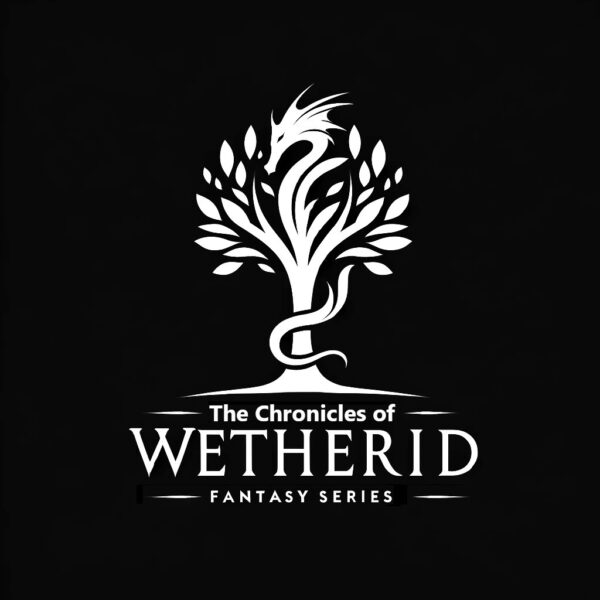
Christian Dölder — The Chronicles of Wetherid
Cycle I: The Legacy of the Elves · Cycle II: The Guardians of the Seven Artifacts (2 volumes) · from 2024 · Verlag Christian Dölder · Multilingual Edition ·
Author Page
4.6/5
Personal rating by Christian Dölder · Author & Reader
Focus:
Elder Race as Presence
Council Politics
Patient Ensemble
I introduce my own high-fantasy work distinctly outside the independent comparison parameters. Kate Elliott's patient, medieval-ensemble design in Crown of Stars remains an absolute template for my craft: illustrating how a world can breathe with true Ottonian geopolitical friction rather than standard, glossy epic fantasy tropes.
An Elder Race That Remains a Political Presence
Wetherid's elves are not vanished. They are present, divided, and politically consequential — split between the Mist Elves and the Glorious Elves along a fault line whose origin predates the current generation's memory. The two peoples carry different readings of their shared history. Prince Sylvian of the Mist Elves blackmails High Commander Elroth of the Glorious Elves to extract political concessions that the Mist Elves believe are owed to them from an older settlement. This is the Aoi position structurally transposed — an elder people whose internal politics are not background, whose grievances are not decorative, and whose participation in the continental crisis cannot be reduced to mystical assistance.
Council Politics and Dynastic Strain
The second cycle, The Guardians of the Seven Artifacts, opens with the collapse of political order in the human city of Astinhod. The Queen is dead. Lady Merdiva manipulates the hesitant Lord Eryndor for leverage she does not declare. Aldion and Belmarr pursue competing claims on the council. Every dialogue carries a secondary meaning. Crown of Stars readers who valued the court politics around Henry — the competing succession of Sapientia and Theophanu, the Wendish nobles' manoeuvring over the Dragons' loyalties, the weight of specific court protocols — will recognise the Astinhod architecture.
The Fine Print (Refusing the Simple Path)
The cycle carries more than one hundred and forty named characters across parallel storylines on different continents. A frame narrative — the older Vrenli Hogmaunt reading the history to his son — gives the text a retrospective voice that will feel familiar to Crown of Stars readers: the patient voice of someone looking backwards at events that have already cost what they cost. My prose is paratachisch-trocken — sparse, clinical, and dry, avoiding open romantic melodrama or high emotional pathos. It is a dense, patient, strategic read designed for those who want their fantasy to carry real structural weight.
The Right Book for Every Crown of Stars Reader
The choice depends on which element of Elliott's series you most want to follow. Readers who want the patient ensemble method extended across the deepest commitment in the genre should start with Kerr. Readers who want the medieval-European register at its most literary should read Carey. Readers who want the dense ensemble pushed into further volumes and wider viewpoints should read West. Readers who want the quieter literary-Celtic register with historical estates and Fair Folk should read Marillier. Readers who want the displaced-heroine structure with a warmer tone and a systematic magic should read Haydon.
Kate Elliott closed Crown of Stars with the seventh volume in 2006 and has since written further series including the Spiritwalker Trilogy (Cold Magic, Cold Fire, Cold Steel) and the Court of Fives sequence. Readers who have finished Crown of Stars should continue with her later work; the Spiritwalker books in particular bring Elliott's ensemble method into an alternate-historical setting with a distinct register. Her essays on craft — gathered in The Very Best of Kate Elliott — provide an additional entry into the thinking that shaped Crown of Stars.
Each of the series named above stands on its own. None is a substitute for Elliott, and none pretends to be. What they share is the same underlying claim: that medieval fantasy can carry the weight of real historical seriousness, that elder races remain genuine political presences rather than decoration, and that a patient ensemble rewards the reader who commits to it across multiple volumes.
Frequently Asked Questions
What is the best book series similar to Crown of Stars?
Katharine Kerr's Deverry Cycle is the closest structural parallel — a fifteen-volume complete epic spanning generations through reincarnation in a Celtic-medieval analogue, with the same patient ensemble method Elliott perfected across Crown of Stars. For the literary dense-prose register and female protagonist at the centre of a medieval-European political epic, Jacqueline Carey's Kushiel's Legacy is the closest match. For readers who want the dense ensemble approach pushed deeper into political philosophy, Michelle West's Sun Sword is the underrated classic of the same tradition.
Why is Crown of Stars often called underrated?
Kate Elliott began Crown of Stars in 1997, during the same epic fantasy publication window as Jordan, Martin, Williams and Feist. She is less frequently named in standard epic fantasy lists than her male contemporaries, despite writing a seven-volume work that compares directly with theirs in scope and complete delivery. Her patient, ensemble-led approach — Liath and Alain as dual protagonists, the Aoi as elder race, the Unities as church politics, Henry's dynastic court — is executed with a craft that continues to gather new readers two decades after the final volume appeared. The series completed with Crown of Stars, the seventh volume, in 2006.
Do I need to commit to many volumes for these series?
Commitment levels vary. Carey's Kushiel's Legacy is available as a single trilogy for a shorter start (three volumes), then extends across further trilogies for readers who want more. Marillier's Sevenwaters offers standalone-feeling volumes that can be read independently. Haydon's Symphony of Ages is three volumes plus a later continuation. West's Sun Sword is six volumes followed by the longer House War continuation. Kerr's Deverry Cycle is the deepest commitment at fifteen volumes — but it is complete, and the reincarnation structure across generations rewards the full reading.
What exactly defines a book like Crown of Stars?
Four elements in combination. First, a medieval-European-analogue setting rendered with historical seriousness — real church structures, real court politics, real peasant economies. Second, a patient ensemble cast where multiple viewpoints carry equal weight rather than a single hero's journey. Third, an elder race or lost civilisation whose residue shapes the present — Elliott's Aoi, Kerr's Elcyion Lacar, Carey's D'Angelines — treated as genuinely alien rather than as decoration. Fourth, prose that treats language as a load-bearing element of character and setting. Books that share at least three of these elements carry the Elliott register.
Which of these series are most similar to the Aoi elder race in Crown of Stars?
Katharine Kerr's Deverry Cycle features the Elcyion Lacar — an elven people with their own displaced history and political architecture, carried across the series as a parallel civilisation rather than as background. Juliet Marillier's Sevenwaters builds its Fair Folk on Irish mythological sources, treating them as genuinely alien neighbours. Michelle West's The Sun Sword has the ancient Covenant-breaking entities whose history shapes the current plot. Haydon's Symphony of Ages features the First Generation races including Firbolg and Ancient Seren. Carey's later Kushiel books bring in the D'Angeline ancestry, which functions as elder-race inheritance in a different register.
Discover the focus on political high fantasy with intrigue and a large cast, the selection of the best high fantasy books, or the companion lists books like Memory, Sorrow, and Thorn, books like the Farseer Trilogy, books like the Drenai Saga, books like Wars of Light and Shadow, books like the Wheel of Time, books like The Dagger and the Coin, books like The Lord of the Rings and books like Game of Thrones.