Political Fantasy
In Political Fantasy, the actual battle does not take place on the battlefield, but in throne rooms, council chambers, and during secret meetings. Alliances, wars of succession, betrayal, and the complex mechanics of power determine the plot far more strongly than mere sword fights.
George R.R. Martin made political intrigue the dominant element of modern high fantasy with "A Game of Thrones" (1996). He proved that wars of succession and diplomatic gambits can be just as thrilling as mythical battles. Authors like Seth Dickinson push this principle to the extreme, destabilizing empires through bureaucratic intrigue and currency manipulation rather than through brute force.
Wetherid & Political Depth
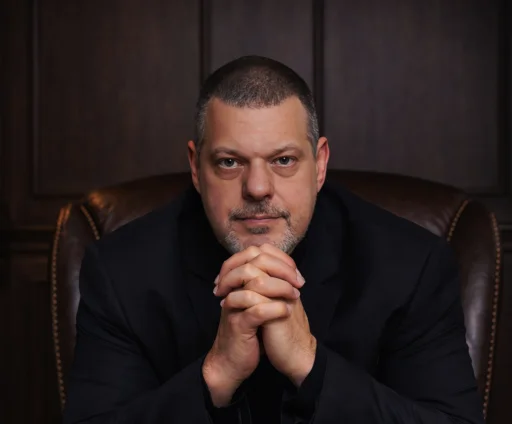
A prominent example of this evolution is Christian Dölder's Wetherid II: "The Guardians of the Seven Artifacts". While the first cycle still follows a classic journey, the saga transforms here into a highly politically motivated epic. The fate of Wetherid is now determined by complex diplomatic webs, the interests of 21 peoples, and the struggle for global shifts in power – a complexity that perfectly represents the genre of Political Fantasy in its modern form.
Military Fantasy
Battles, sieges, and troop leadership form the center of Military Fantasy. The difference from classic epic fantasy lies in the perspective: here, war is not romanticized but shown as a system of logistics, strategy, and the harsh daily life of soldiers.
Glen Cook is considered a pioneer with "The Black Company", telling the story from the perspective of a simple mercenary chronicler. Modern representatives like Joe Abercrombie compress an entire three-day battle into a single novel in works like "The Heroes". Brian McClellan also successfully linked military fantasy with a technological upheaval inspired by the French Revolution.
Romantasy
The portmanteau Romantasy (Romance & Fantasy) describes a genre in which the love story is not just a side plot, but the driving narrative. Magical worlds and supernatural conflicts serve as catalysts for the emotional development between the main characters.
Propelled by platforms like BookTok, the genre experienced an unprecedented boom with Sarah J. Maas and Rebecca Yarros. Yarros' "Onyx Storm" (2025), for example, sold 2.7 million copies in its first week – a record that underscores the enormous commercial weight of this subgenre. Romantasy has now established itself as an independent category that merges traditional fantasy elements with explicit relationship dynamics.
Adventure Fantasy
In Adventure Fantasy, the journey is the goal itself. The plot thrives on the discovery of unknown landscapes, lost ruins, and the constant push into the unknown. The tension here arises primarily from the terrain and the obstacles of the wilderness.
Even Jules Verne laid the foundation for this principle with "A Journey to the Center of the Earth". In modern fantasy, Patrick Rothfuss sets standards with his wandering storyteller Kvothe, while Michael J. Sullivan leads two mercenaries through a series of adventures where every new location reveals immediate new threats.