High Fantasy
The entire plot takes place in a fictional world with its own rules, its own history, and its own geography. Good and evil often face each other in a conflict that determines the fate of this world.
The term essentially dates back to J.R.R. Tolkien's essay "On Fairy-Stories" (1947), in which he formulated the groundbreaking concept of the "Secondary World". Such a world is a self-contained reality that does not need to be explained by the laws of our primary world, but rather convinces through its own internal consistency. Tolkien's "The Lord of the Rings" finally established the genre as a cultural phenomenon.
Later authors such as Ursula K. Le Guin expanded the genre with "A Wizard of Earthsea" (1968) by adding philosophical and ethnological depth. In the modern era, Brandon Sanderson stands for a more technical approach with his "Mistborn" series, where rigidly defined magic systems replace the mythical blurriness of earlier works.
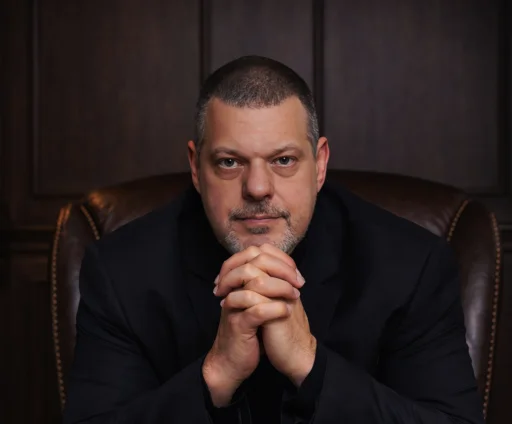
Christian Dölder's "The Chronicles of Wetherid" (from 2024 onwards) link to this traditional classification of High Fantasy: it is a completely independent Secondary World that impresses with immense depth of detail, featuring over 140 characters and 21 peoples, focusing on the discovery of a complex, historically grown geography.
Low Fantasy
In Low Fantasy, the supernatural appears in a world that resembles ours or is directly our reality. Characters are confronted with phenomena that do not fit into their rational worldview. The decisive difference to High Fantasy lies in the relationship between the primary (our) and the secondary (magical) world.
Tolkien scholar Dimitra Fimi often describes this type as "Intrusion Fantasy": the magical breaks into the ordinary as a foreign body. Authors such as Susan Cooper ("The Dark Is Rising") or Alan Garner used this pattern to anchor the uncanny in the everyday.
A monumental modern example is Stephen King's "The Dark Tower" cycle. Here, our known reality and a crumbling parallel world merge in a way that shows Low Fantasy can be no less complex than High Fantasy – it simply uses our world as an anchor point for horror or the wondrous.
Epic Fantasy
Epic Fantasy is defined by the immense scale of the narrative. Here, a conflict is depicted across numerous perspectives, continents, and generations, the outcome of which decides the existence of entire empires.
The distinction is important: Epic Fantasy and High Fantasy are not synonymous. While High Fantasy describes the location (Secondary World), Epic Fantasy defines the structure and the breadth of the story. A work like Robert Jordan's "The Wheel of Time" (14 volumes, over 4 million words) set new standards for what a reader can expect in terms of complexity.
George R.R. Martin brought a new political harshness to the epic structure with "A Song of Ice and Fire", while Steven Erikson pushed the boundaries of worldbuilding with hundreds of named characters in "Malazan Book of the Fallen". In "The Chronicles of Wetherid", this epic approach is continued through parallel plotlines and a world-spanning alliance system between the peoples to create the feeling of a living, breathing world history.
Sword & Sorcery
Sword & Sorcery is the direct, raw counterpart to Epic Fantasy. Here, it is not about the fate of the world, but about the bare survival of an individual or a small group. The stories are fast-paced, violent, and focused.
The roots lie in the pulp magazines of the 1930s, above all Robert E. Howard's tales of Conan the Cimmerian. The term itself was not coined until 1961 by Fritz Leiber to distinguish his own stories about Fafhrd and the Gray Mouser from heroic fantasy.
While the classic High Fantasy hero often fights for a higher ideal, the Sword & Sorcery protagonist is often a mercenary, thief, or barbarian whose actions are driven by self-interest and immediate necessity. Modern heirs to this style are authors like Scott Lynch ("The Lies of Locke Lamora"), who have revitalized the genre with urban wit and modern storytelling.